Banks Ignored Consumers' Feelings About Money
It Cost Them Trust
In 2018, Emotional Banking™ argued that retail banks were misdiagnosing loyalty, behaviour and risk. It was never a CX issue. It was a human one.
Emotional Banking 2.0: Tales from the #FinTech Crypt and the Organisational Trenches examines what followed.
This is not a sequel. It is a record.
Emotional Banking™ Reframed Customer Centricity
Emotional Banking™ positioned behavioural economics as operational infrastructure, not marketing language — a systems view where culture shapes product design, fear shapes policy, and trust grows slowly but disappears quickly.
Trust failures in financial systems rarely begin with data alone. They begin when organisations lose visibility into how decisions, behaviours and incentives interact.
Yet most banks still treat emotion as background noise instead of structural data.
Emotional Banking 2.0 addresses:
Organisational culture in financial services
Human-centred design inside fintech
Unresolved institutional decisions compounding under scale
Psychological safety as a risk variable
Trust design in AI-augmented systems
Explore the original Emotional Banking™ essays
The argument was not wrong.
It arrived before the market was ready.
From banking to all organisations
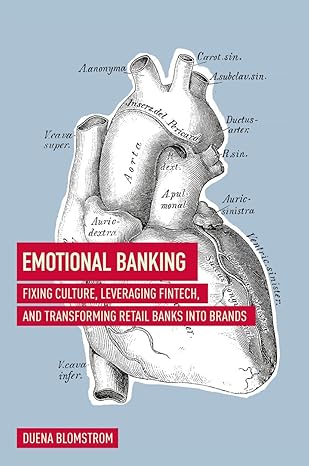
Emotional Banking™
Fixing Culture, Leveraging FinTech, and Transforming Retail Banks into Brands
The book introduces four methods: Money Moments, Build a Voice, Everyone's a Designer, and Intrapreneur Warrior's Guide.
This is also where Human Debt™ was first conceived — the idea that organisations accumulate invisible costs from misalignment and emotional friction.
Emotional Banking 2.0
Tales from the #FinTech Crypt and the Organisational Trenches
AI entered decision systems. Trust weakened. Cultural fragility surfaced as those unresolved decisions kept compounding.
Tales from the FinTech Crypt
The field evidence is already public.
Leadership errors that compound under scale
Cultural blind spots that distort product decisions
Trust failures that could have been prevented
Behavioural misreads inside growth narratives
Not promotional conversations — structured examinations of how institutions behave when pressure rises. On podcast and YouTube.
Episodes



Bank executives managing AI-era trust exposure.
FinTech founders moving beyond product market fit.
Behavioural economists working inside financial systems.
Culture leaders responsible for decision quality.
Regulators and policy observers tracking institutional risk.
If your work sits at the intersection of money, power and behaviour, this book is relevant.
Receive Field Notes from the FinTech Trenches
Periodic dispatches covering:
Trust signals in financial services
Organisational miscalculation patterns
Psychological safety under regulatory strain
AI-driven behavioural risk
No promotional clutter. No artificial urgency. Clear analysis.
Emotional Banking™ was a warning.
Emotional Banking 2.0 documents what became visible once scale, AI and institutional pressure intensified. Trust will not return through dashboards or slogans — it returns through behavioural literacy, structural integrity and cultural accountability.
The human layer is not soft context — it is operational reality under pressure, and this work is for leaders prepared to examine it before it becomes measurable loss.